Overview of safer nicotine products in LMICs
Safer nicotine products (SNPs) are central to the concept of tobacco harm reduction because they deliver nicotine without burning tobacco, thereby avoiding most of the toxicants responsible for smoking-related disease. In many low- and middle-income countries (LMICs), awareness of these products is growing, yet their availability, affordability, and regulation vary considerably across regions [^1].
There are four main categories of SNPs currently found in LMIC markets.
- E-cigarettes, or vapes, are the most globally widespread category of safer nicotine products. They are battery-powered devices that heat a nicotine-containing liquid to produce an inhalable aerosol and range from inexpensive disposable pens to more advanced refillable systems. However, in many LMICs, particularly in Africa and South Asia, their market penetration remains limited due to cost, import restrictions, and weak distribution networks.
- Heated tobacco products form another category; these devices warm processed tobacco sticks rather than burning them, releasing nicotine and flavour with far fewer harmful chemicals than cigarettes.
- A newer option is nicotine pouches, which are small tobacco-free sachets placed between the gum and lip to release nicotine orally. They are discreet, smokeless, and have become increasingly popular in parts of Africa and Eastern Europe, albeit on a limited scale.
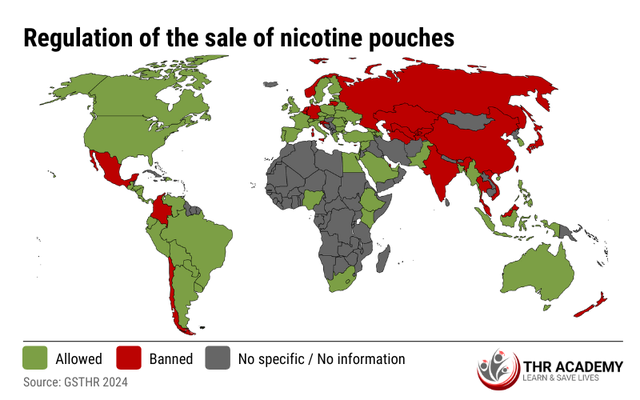
4. The final category is low-nitrosamine snus, a moist oral tobacco product with markedly lower levels of carcinogens. Although traditionally used in Sweden, Swedish-style snus and comparable low-risk oral products are beginning to appear in a small number of LMIC markets, albeit on a limited and niche scale.
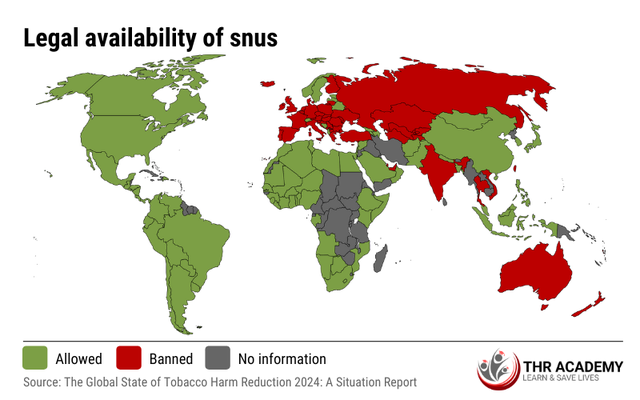
The availability of SNPs differs widely across regions. In Asia, countries such as the Philippines and Indonesia have emerging legal markets for e-cigarettes and heated tobacco, while India has implemented a comprehensive ban on their sale. Across Africa, nations like Kenya and South Africa allow limited retail or online sales, yet regulation remains inconsistent and enforcement weak. In Latin America, several countries, including Mexico and Brazil, prohibit imports and domestic sales, although informal trade continues to meet consumer demand.
However, most LMICs have no specific regulatory framework for SNPs, meaning that products are either informally tolerated, completely banned, or sold in unregulated markets.
-
Adebisi YA, Lungu S, Curado A, Oke G, Yach D. Understanding research gaps and priorities for tobacco harm reduction in low-income and middle-income countries. Ethics, Medicine and Public Health. 2025 Jan 1;33:101117.