Affordability and accessibility
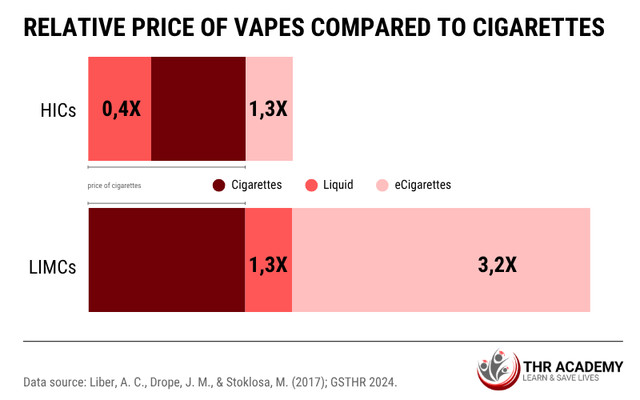
Affordability is one of the most significant barriers to the uptake of safer nicotine products (SNPs) in low- and middle-income countries (LMICs).
In most cases, the cost of an entry-level vaping device is considerably higher than that of a packet of cigarettes, even though the long-term cost of maintaining these products may be lower. For example, in the United Kingdom, a packet of cigarettes typically costs around £12–£15, whereas a basic refillable vaping starter kit costs approximately £15–£25. For many people who smoke in LMICs, where disposable income is limited, this initial price difference is a decisive factor. The lack of local manufacturing further drives up costs, as most products are imported and subject to high import duties or informal mark-ups.
Taxation policies, where they exist, are often inconsistent or poorly aligned with relative risk [^1]. Although most countries impose lower excise tax burdens on safer nicotine products (SNPs) than on cigarettes, recent analysis shows substantial anomalies. In 15 of 50 countries, the excise tax burden on e-liquids exceeds that on cigarettes, while taxation of heated tobacco products (HTPs) is higher than cigarettes in seven countries and equal to cigarette taxation in six out of 65 [^1]. Such tax structures contradict the principle of risk-proportionate regulation and can discourage people who smoke from switching to less harmful alternatives.
Accessibility also varies widely within and across countries. Urban populations are generally more likely to find SNPs through retail outlets, specialised shops, or online vendors, whereas rural populations have little or no access to such products. This urban–rural divide is amplified by infrastructure limitations, weaker distribution networks, and lower purchasing power outside major cities.
Gender disparities also shape access: women, particularly in conservative societies, may face stigma for using nicotine products of any kind, and thus are less likely to access or even be aware of safer alternatives. Among young people, access presents a complex challenge. While restrictive policies aim to prevent underage use, poorly enforced bans and unregulated informal markets mean that youth can still obtain SNPs in many settings.
Without deliberate policy reforms, such as differentiated taxation, local production incentives, and equitable retail distribution, SNPs will remain inaccessible to the people who could benefit from them most: low-income earners who smoke seeking a viable, less harmful alternative to combustible tobacco.