Monitoring and evaluation
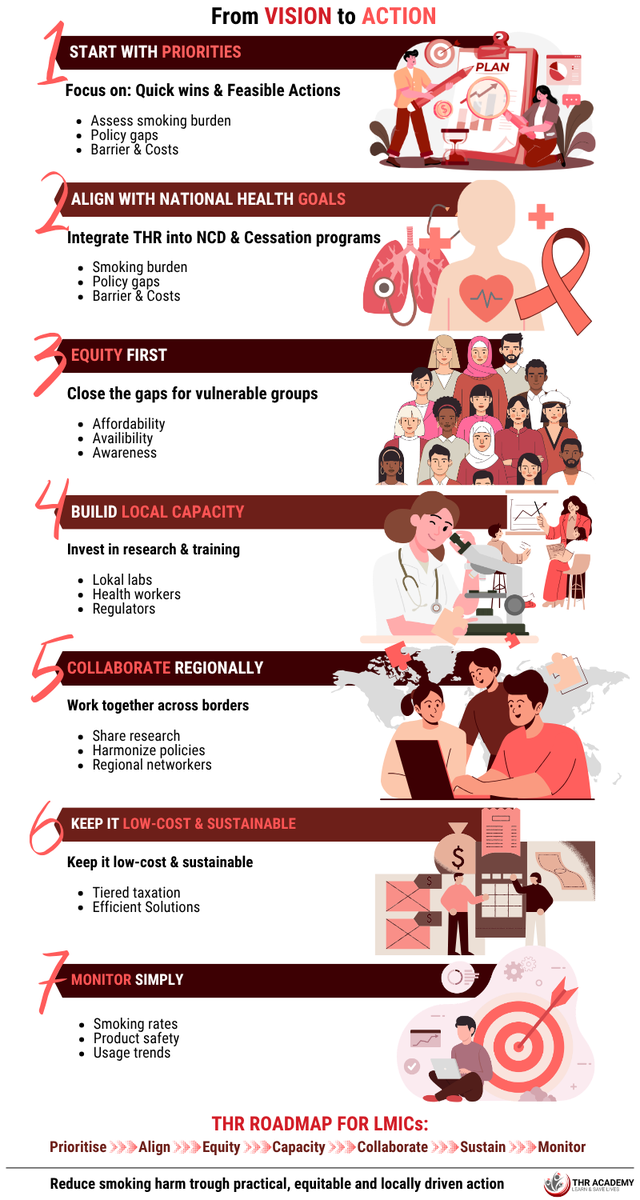
Monitoring and evaluation for THR in LMICs should be simple, low-cost, and proportionate. The aim is not to build new surveillance systems, but to use existing data sources to track whether people who smoke are shifting away from combustible tobacco. At a minimum, this can include basic indicators such as changes in smoking prevalence, reported use of safer nicotine products, and trends in cigarette sales or imports.
Data collection should rely on what is already feasible. This may include routine health surveys, limited facility-based reporting from cessation services, or periodic market monitoring of product availability and pricing. In many settings, even small, repeated data snapshots are more useful than complex systems that cannot be sustained. Monitoring should focus on identifying clear problems, such as persistent misinformation, access barriers, or youth uptake, rather than attempting comprehensive outcome measurement.
Evaluation also serves a practical purpose: demonstrating that THR is delivering public health benefit at low cost. Simple evidence of reduced smoking, increased switching, or improved access to safer alternatives can support policy decisions and maintain political and public confidence. By keeping M&E lean and realistic, LMICs can track progress, make course corrections, and support THR implementation without placing additional strain on already stretched health systems.